Nature narratives
In a Changing World: Climate Fiction Adventures for Middle Grade Readers
10/08/26 11:50 Filed in: Environmental Education
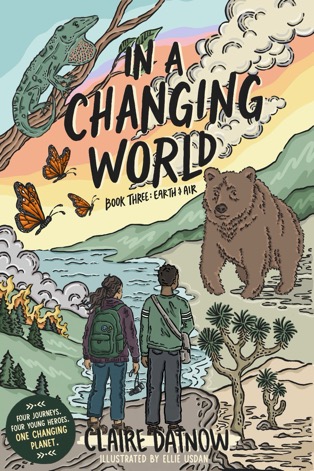
ISBN: 978-0-9969446-7-0
In a Changing World: Middle Grade Climate Fiction, Wildlife & Adventure
August 10, 2026
An Interview with Author Claire Datnow
I’m fascinated by new scientific discoveries—especially what scientists are learning about our changing planet. Every day, researchers gather evidence about how climate change is affecting wildlife, ecosystems, and communities, and what those changes may mean for the future.
But scientific facts alone don’t always make us feel what is happening.
Stories through novels, movies, television, and science can become personal and emotionally meaningful. That’s what I strive to do when I write climate fiction for upper elementary and middle grade readers ages 10–14. I weave nature adventure and scientific mystery together to show young readers something remarkable: the natural world is already responding and adapting to climate change.And perhaps we can learn from nature.
For teachers, librarians, families, and young readers, these stories offer an exciting and adventurous way to explore climate science, wildlife, adaptation, conservation, and the choices we can make in a changing world.
Why do animals and wildlife play such an important role in my books?
No matter the setting or theme, wildlife finds its way into my stories. I’m constantly reading about animals, ecosystems, conservation, and new scientific discoveries that I can weave into my eco-adventures.
In a Changing World, young readers encounter monarch butterflies, Kodiak brown bears, anole lizards, and Joshua trees. Each story begins with a mystery inspired by real science:
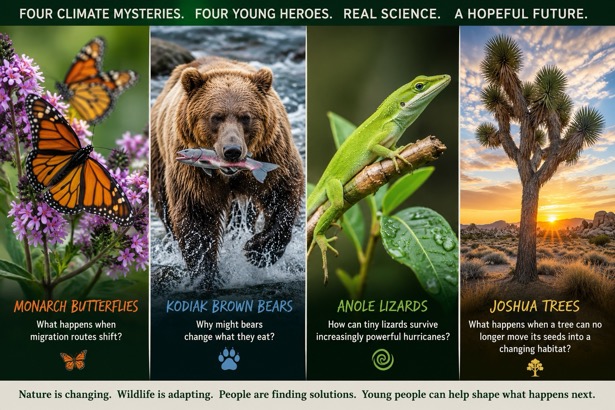
What happens when familiar migration routes shift?
Why might bears change what they eat?
How can tiny lizards survive increasingly powerful hurricanes?
And what happens when a tree can no longer move its seeds into a changing habitat?
These real-world mysteries allow me to explore not only the effects of climate change, but also adaptation, resilience, biodiversity, and successful conservation efforts.
How would you describe your climate fiction?
My stories are part climate fiction, part mystery, and part nature adventure.
Climate change is such an enormous subject that it can feel difficult—even overwhelming—for young readers. Instead of beginning with the enormity of the problem, I begin with something they can see and wonder about.
Why are there fewer butterflies this summer?
Why are bears changing their diets?
How could a tiny anole lizard survive a monster hurricane?
These questions turn climate science into mysteries young characters—and young readers—can investigate. Through adventure and discovery, the larger picture gradually emerges.
My goal is to help children understand the seriousness of climate change without overwhelming them with fear.
How do you write hopeful climate-action stories?
I focus on two things: solutions and young heroes.
My protagonists are curious, determined young people who ask questions, investigate mysteries, make mistakes, discover evidence, and ultimately find ways to help.
Just as importantly, I want young readers to imagine a future in which solutions are possible—communities restoring habitats, scientists and citizens working together, renewable energy becoming part of everyday life, and young people contributing ideas of their own.
Children hear plenty about what could go wrong with our planet. They also deserve stories that help them imagine what could go right.
Climate hope doesn’t mean pretending the problems aren’t serious. It means showing that knowledge, creativity, conservation, and collective action can make a difference.
Who Are These Climate Adventures For?
Teachers and homeschool educators: The stories can spark discussions about climate science, biodiversity, wildlife adaptation, conservation, resilience, and problem-solving—while giving students mysteries and adventures they actually want to read.
Librarians: In a Changing World offers adventure-driven environmental fiction for readers ages 10–14 who enjoy animals, mysteries, science, nature, and stories about young people making a difference.
Parents and grandparents: These climate adventures provide a hopeful way to introduce young readers to environmental challenges without overwhelming them with fear. They can also open conversations between generations about wildlife, nature, and our changing planet.
Environmental organizations and nature centers: Climate fiction can complement environmental education and youth outreach by turning real scientific research and conservation challenges into stories young people can connect with emotionally.
Young readers: Most of all, these are adventures—filled with hurricanes, bears, butterflies, lizards, mysteries, danger, discovery, and young people determined to find answers.
Teachers and librarians can also explore my Discussion Questions and educational resources for ways to extend the stories beyond the page.
Can climate mysteries inspire kids to become part of the solution?
I believe stories can plant that first seed.
Over twenty-five years as a published author, I’ve seen how deeply young readers can connect with fictional characters. When they care about what happens to a character, an animal, or a place, complicated environmental issues suddenly become personal.
Learning about climate science has changed me, too. The more I understand, the less helpless I feel. Instead of seeing only problems, I can see choices, possibilities, and solutions.
That is what I hope readers ages 10–14 take away from In a Changing World.
Nature is changing. Wildlife is adapting. People are finding solutions. And young people can help shape what happens next.
For teachers, librarians, families, and young readers, I hope these climate adventures offer something beyond information: curiosity, courage, and a reason to believe that a more hopeful future is still ours to create.
Discover In a Changing World
Four climate mysteries. Four young heroes. Real science. One hopeful message: nature can adapt—and so can we.
Written for readers ages 10–14, In a Changing World combines mystery, wildlife, science, adventure, and climate solutions to show young readers that the future isn’t something they simply inherit—they can help shape it.
Explore
In a Changing World
Teacher discussion and questions
Meet Claire Datnow
Eco-Fiction: Crafting Nature-Inspired Narratives
29/05/24 11:01 Filed in: Eco Adventures
Eco-Fiction: Crafting Nature-Inspired Narratives
I invite you to embark on a journey to explore Eco-fiction as a writer. When I began my Eco Fiction Adventure series, I did not expected it to be so challenging yet so rewarding. Your journey will reveal a genre that offers inspiration and a clear purpose to authors. It provides a unique avenue for writers to delve into critical ecological issues through the power of storytelling and intertwines imagination with science and advocacy that inspires hope and action.
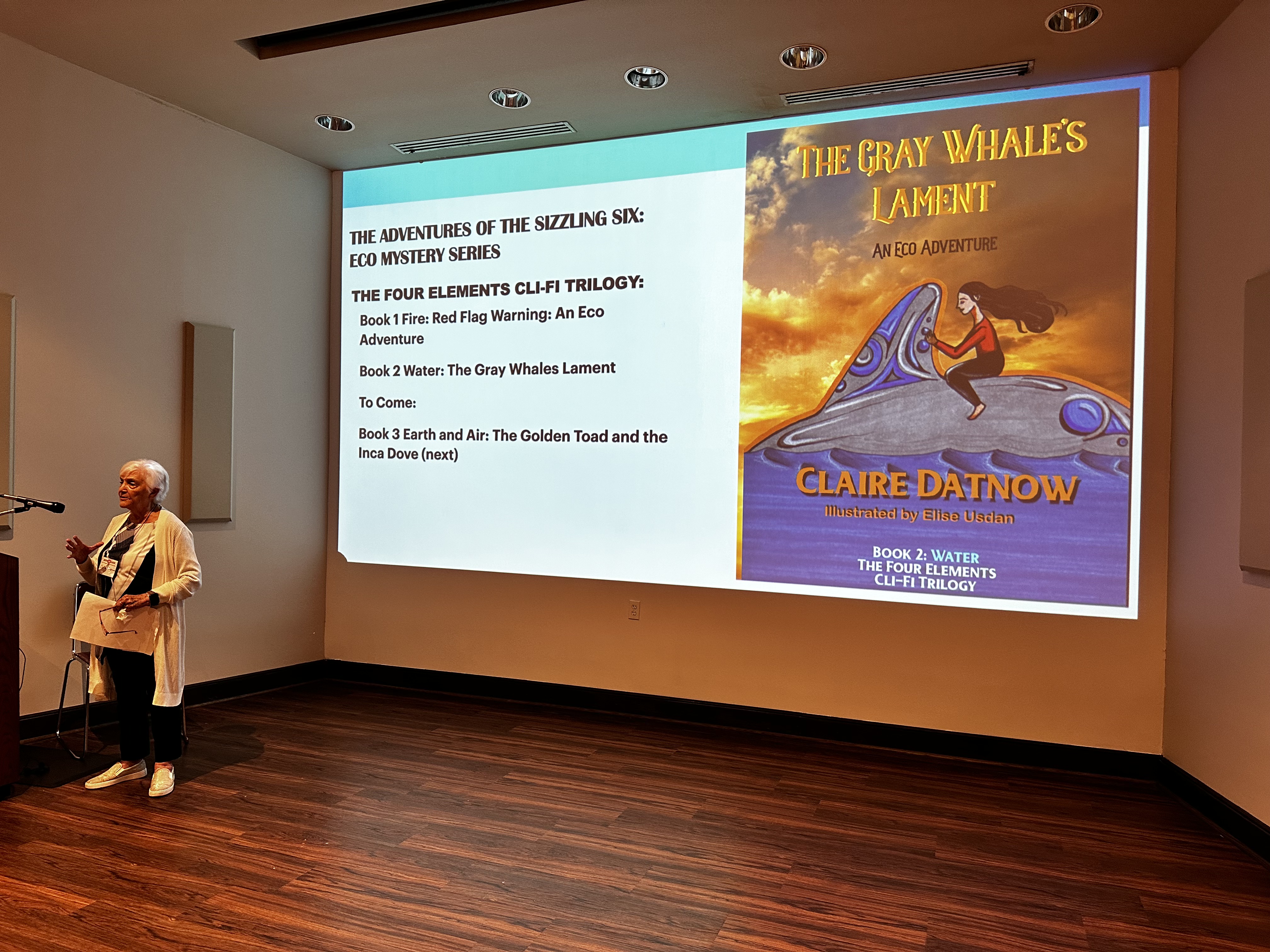
I started with “The Lone Tree: An Eco Adventure,” more than two decades ago— and more recently Cli-fi (Climate fiction) trilogy—for upper elementary and MG. Along the way I encountered inspiring students, wondrous endangered animals, and outstanding scientist-conservationist dedicated to saving them.
Eco-fiction, in essence, is fiction that revolves around ecological themes and environmental issues. What sets Eco-fiction apart is its deep connection to the natural world and its exploration of humanity’s relationship to it.
Eco-fiction also includes “cli-fi” (climate offers the writer to choice c from a wide range of narratives styles—from realism, magic realism, to dystopian visions of a post-apocalyptic world ravaged by climate change or utopian tales of harmony between humans and nature.
What are the rewards of writing Eco-Fiction and Cli-Fi or Climate Fiction? Through vivid imagery and thought-provoking narratives, this genre helps readers gain insight into the impact of human activity on our planet and inspire them take action to protect and live in harmony with the natural world.
As writers, we have a wonderful opportunity to use the power of storytelling to spark conversations, evoke empathy, and inspire change. By weaving environmental themes into our work, we can contribute to a broader dialogue about the urgent need for ecological stewardship and collective action. In a world grappling with unprecedented environmental challenges, Eco-fiction inspires hope and a call to action. Through our words and imaginations, we have the gift to tell narrative that envisions the future on this planet by building a more sustainable and just world.
"Let us embrace the transformative potential of Eco-fiction and harness the power of storytelling to educate and to inspire positive change. Together, we can build a brighter, greener tomorrow—one page at a time! The pen is indeed mightier than the sword, and in our hands it shines a beacon of hope for the future of our a planet."
Resources for Eco-Fiction Writers
Exploring Eco_Fiction: A Green Path for writers
For authors interested in exploring eco-fiction, there is a wealth of resources available to guide and inspire your creative journey:
Claire Datnow: How to Become An Eco Detective
clairedatnow.com books and blogs on environmental fiction and climate fiction.
Dragonfly.eco: This online hub is dedicated to eco-fiction and offers a resources, including book recommendations, author interviews, and articles exploring the intersection of literature and the environment.
The Cli-Fi Report: Stay up to date with the latest news and developments in the world of eco-fiction through the Cli-Fi Report, a comprehensive online publication covering everything from new book releases to academic research on climate fiction. #clifi
Eco-Lit Books: Discover a curated selection of eco-fiction titles and environmental literature recommendations on Eco-Lit Books. Whether you’re looking for dystopian thrillers or lyrical nature writing, this website has something for every eco-conscious reader.
The Nature of Cities: This online platform brings together writers, artists, and activists to explore urban ecology and imagine sustainable futures for cities. Writers interested in eco-fiction set in urban environments will find a wealth of inspiration and community here
Explore these resources to deepen your understanding of eco-fiction and connect with a community of like-minded writers passionate about exploring environmental themes through literature!
I invite you to embark on a journey to explore Eco-fiction as a writer. When I began my Eco Fiction Adventure series, I did not expected it to be so challenging yet so rewarding. Your journey will reveal a genre that offers inspiration and a clear purpose to authors. It provides a unique avenue for writers to delve into critical ecological issues through the power of storytelling and intertwines imagination with science and advocacy that inspires hope and action.
I started with “The Lone Tree: An Eco Adventure,” more than two decades ago— and more recently Cli-fi (Climate fiction) trilogy—for upper elementary and MG. Along the way I encountered inspiring students, wondrous endangered animals, and outstanding scientist-conservationist dedicated to saving them.
Eco-fiction, in essence, is fiction that revolves around ecological themes and environmental issues. What sets Eco-fiction apart is its deep connection to the natural world and its exploration of humanity’s relationship to it.
Eco-fiction also includes “cli-fi” (climate offers the writer to choice c from a wide range of narratives styles—from realism, magic realism, to dystopian visions of a post-apocalyptic world ravaged by climate change or utopian tales of harmony between humans and nature.
What are the rewards of writing Eco-Fiction and Cli-Fi or Climate Fiction? Through vivid imagery and thought-provoking narratives, this genre helps readers gain insight into the impact of human activity on our planet and inspire them take action to protect and live in harmony with the natural world.
As writers, we have a wonderful opportunity to use the power of storytelling to spark conversations, evoke empathy, and inspire change. By weaving environmental themes into our work, we can contribute to a broader dialogue about the urgent need for ecological stewardship and collective action. In a world grappling with unprecedented environmental challenges, Eco-fiction inspires hope and a call to action. Through our words and imaginations, we have the gift to tell narrative that envisions the future on this planet by building a more sustainable and just world.
"Let us embrace the transformative potential of Eco-fiction and harness the power of storytelling to educate and to inspire positive change. Together, we can build a brighter, greener tomorrow—one page at a time! The pen is indeed mightier than the sword, and in our hands it shines a beacon of hope for the future of our a planet."
Resources for Eco-Fiction Writers
Exploring Eco_Fiction: A Green Path for writers
For authors interested in exploring eco-fiction, there is a wealth of resources available to guide and inspire your creative journey:
Claire Datnow: How to Become An Eco Detective
clairedatnow.com books and blogs on environmental fiction and climate fiction.
Dragonfly.eco: This online hub is dedicated to eco-fiction and offers a resources, including book recommendations, author interviews, and articles exploring the intersection of literature and the environment.
The Cli-Fi Report: Stay up to date with the latest news and developments in the world of eco-fiction through the Cli-Fi Report, a comprehensive online publication covering everything from new book releases to academic research on climate fiction. #clifi
Eco-Lit Books: Discover a curated selection of eco-fiction titles and environmental literature recommendations on Eco-Lit Books. Whether you’re looking for dystopian thrillers or lyrical nature writing, this website has something for every eco-conscious reader.
The Nature of Cities: This online platform brings together writers, artists, and activists to explore urban ecology and imagine sustainable futures for cities. Writers interested in eco-fiction set in urban environments will find a wealth of inspiration and community here
Explore these resources to deepen your understanding of eco-fiction and connect with a community of like-minded writers passionate about exploring environmental themes through literature!