Question to Spark Conversations
Because Book Three of the Trilogy: In a Changing World is built around four interconnected climate mysteries, the strongest discussion questions encourage students to think critically, make connections between science and human choices, and reflect on their own role in caring for the planet. These questions are appropriate for Grades 4–8 (ages 9–14) and align well with inquiry-based learning and classroom discussions.
Before Reading
1. What clues in nature can tell us that something is changing before most people notice?
2. Why do you think curiosity is one of the most important qualities of a scientist?
3. Can one person—even a young one—make a difference in solving an environmental problem? Why or why not?
4. What animals or places in nature do you care about most? Why?
General Questions
1. The four stories take place in different parts of the world. What do they all have in common?
2. Why do you think the author chose ordinary young people—not superheroes—to solve these mysteries?
3. Throughout the book, the characters make careful observations before jumping to conclusions. Why is observation such an important scientific skill?
4. Which mystery surprised you the most? Explain your answer using examples from the story.
5. Every story shows nature sending warning signs. What were some of those signs?
6. Which character do you relate to the most? Why?
7. How did teamwork help solve each mystery?
8. Why is asking good questions often more important than already knowing the answers?
Part 1
“Sticky-Toed Lizards and Hurricane Ghosts.”
1. Alvin notices small changes that many adults overlook. Why are careful observers often the first to discover new scientific ideas?
2. How did the hurricane affect both people and wildlife?
3. Why do scientists study tiny creatures like anoles? What can they teach us about bigger environmental changes?
4. Grandma Nettie and Dr. B use different kinds of knowledge. How are Grandma’s traditional knowledge and Dr. B’s scientific research both valuable?
5. Alvin keeps a field journal. Why is recording observations important?
6. What would you have done if you had been Alvin during and after the hurricane?
Part 2
The Girl Who Cried “Save the Bears”
1. Why were the brown bears changing their behavior?
2. How are berries connected to salmon, bears, forests, and people?
3. How did warming temperatures affect the food web?
4. Why was it important not to blame the bears?
5. What difficult decisions did people have to make?
6. How can understanding an animal’s needs help people and wildlife live together safely?
Part 3
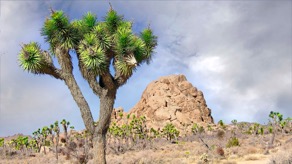
”Ode To Joshua Trees”
1. Josh has always felt a special connection to Joshua trees. Have you ever felt drawn to a particular place, animal, or plant? Why do you think people sometimes form these connections?
2. Josh discovers that understanding the past helps explain what is happening today. Why do scientists study fossils and extinct animals? What can they teach us about the future?
3. Giant ground sloths disappeared thousands of years ago, but their absence still affects Joshua trees today. What does this tell us about how living things depend on one another?
4. Josh learns that every species plays a role in nature. Can you think of another example where two different species help each other survive?
5. Climate change is forcing many plants and animals to adapt, move to new places, or face extinction. Why might some species adapt more easily than others?
6. Josh realizes that knowing about a problem is only the first step. Why is taking action just as important as understanding the science?
7. Caleb and the environmental club work together to restore Joshua trees. How can teamwork accomplish things that one person alone cannot?
8. Imagine you were transported thousands of years into the past like Josh. What questions would you ask about the ancient world? What would you hope to discover?
9. Josh changes from a quiet observer into someone willing to lead others. What experiences helped him grow? Have you ever surprised yourself by doing something you didn’t think you could do?
10. The story shows that humans can both harm and help nature. What responsibilities do you think people have toward endangered plants and animals?
11. Scientists preserved Joshua tree seeds in a conservation seed bank. Why is it important to protect species before they become endangered or extinct?
12. Josh learns that one extinct animal changed the future of an entire ecosystem. How does this support the idea that “everything in nature is connected”?
13. If you were a National Park ranger, what would be your top priority for protecting Joshua trees over the next fifty years?
14. The title is Ode to Joshua Trees. An ode is a poem or tribute celebrating something important. Why do you think the author chose this title? What qualities of Joshua trees deserve celebrating?
15. At the end of the story, Josh understands that the future depends on the choices people make today. What is one action you could take in your own community to help protect nature?
Part 4.
“The Case of the Missing Monarchs.”
1. Why was Mari so worried when fewer monarch butterflies arrived in Mexico?
2. Dana notices something unusual on the migration map. Why do discoveries often begin with one small observation?
3. What clues helped the girls solve the mystery?
4. How did climate change affect the monarchs’ migration?
5. Why are milkweed plants so important?
6. How did scientists and citizen scientists work together?
7. Why is international cooperation important when protecting migratory animals?